Beauty and the Beast: Back to it’s roots
A lot of dialogue has transpired around the recently released Beauty and the Beast: an odd collection ofhighly-positive reinforcement stemming from a nostalgic connection to the original film intermingled with critiques on feminism and how it relates to the fable. For those who need a refresher, Beauty and the Beast—the current live-adaption of the 1991 Disney animated film—is in turn an adaptation of the French fairy tale of the same name. Written by Jeanne-Marie Leprince de Beaumont, Beauty and the Beast is a dark, rather cautionary tale where a woman falls in love with an animal. The subtext of the French fable deals heavily with the idea of marrying a literal monster.
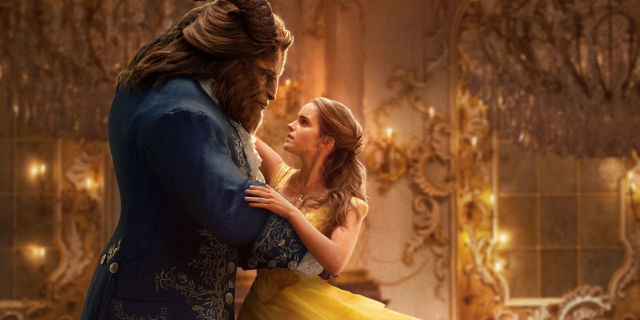
With the 1991 remake the meaning behind this story was adapted for a general audience, becoming a bright, fairy tale musical that was as likely to entertain as it was to inform. Drawing inspiration from this adaptation, Beauty and the Beast (in 2017) modernizes the tale further by giving it a more feminist edge. Emma Watson plays Belle, who—while still sporting the same blue and white dress, then a golden gown later on—has become an even more independent individual, her voracious appetite for reading magnified by Watson’s personal history with literature. Gaston and his sidekick LeFou are played by Luke Evans and Josh Gad, and even though Gaston is his usual self, complete with protruding chin and bright red shirt, other characters have been tweaked to display a more sexually diverse repertoire.
The most talked about individual in the franchise is the Beast, portrayed by Dan Stevens. When stripped of his anthropomorphic, cartoonish visage from the animated feature—as he was, in this film—he becomes a unsettling real version of the original fable’s subtext, inadvertently bringing the story back to its roots.
Shianne Edelmayer is a freelance illustrator and writer based in Nelson, BC.